
The Ultimate Checklist: 45+ Critical Questions to Ask Your Fertility Doctor in 2026


Think of your first fertility consultation as a high-stakes job interview where you are the hiring manager. While it's easy to feel like just another medical record in a crowded waiting room, you're actually selecting a partner for one of the most significant journeys of your life. Knowing the right questions to ask your fertility doctor is the difference between feeling lost in a maze of IUI and IVF protocols and moving forward with a clear, clinical roadmap.
It's completely normal to feel overwhelmed by complex treatment paths, rising medication costs, and the emotional weight of a diagnosis. You deserve more than a generic plan; you deserve a partnership built on transparency and expertise. We've compiled an expert-vetted checklist of over 45 critical questions to help you walk into your consultation with total confidence. This guide covers everything from the latest 2026 ASRM guidelines on recurrent pregnancy loss to the specifics of lab protocols and insurance mandates, ensuring you leave your appointment with absolute clarity and a sense of partnership with your medical team.
Key Takeaways
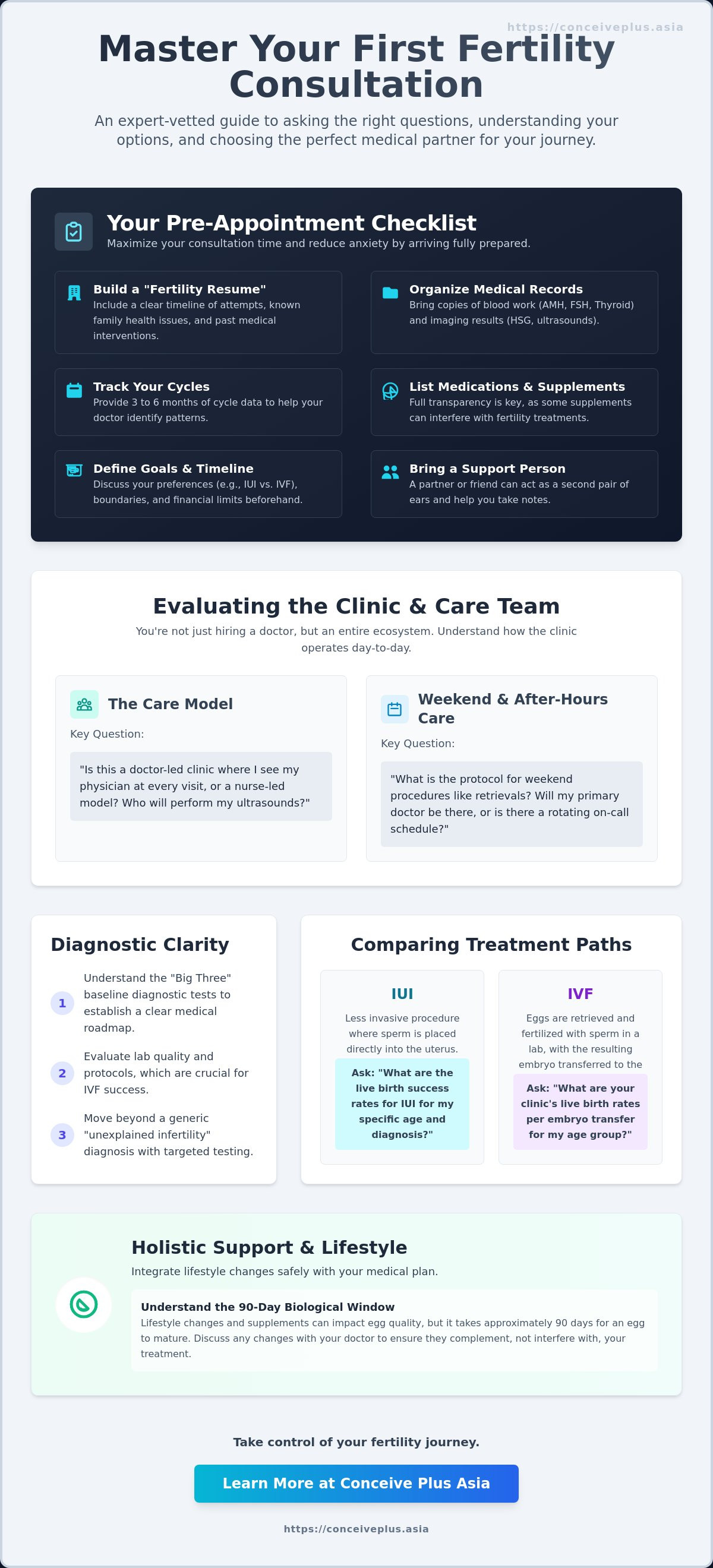
- Learn how to build a "Fertility Resume" to maximize your limited consultation time and significantly reduce pre-appointment anxiety.
- Identify the specific questions to ask your fertility doctor to evaluate the embryology lab's quality and the clinic's day-to-day care model.
- Discover the essential "Big Three" diagnostic tests required to move beyond a label of unexplained infertility toward a targeted medical roadmap.
- Gain the tools to compare treatment paths like IUI and IVF by focusing on live birth rates for your specific age group.
- Understand the 90-day biological window and how to discuss lifestyle changes or supplements safely with your medical team.
Preparing for Your First Consultation: The Pre-Appointment Checklist
Most fertility clinics book initial consultations for 60 minutes or less. That is a tight window to cover years of health history and your hopes for the future. Walking in with a structured plan prevents you from forgetting the most critical questions to ask your fertility doctor while you are sitting in the exam room. Understanding the basics of infertility helps you realize that this is a medical investigation, and you are the lead investigator. Preparation is the most effective way to lower your cortisol levels and ensure you get the data you need to make an informed decision.
To help you prepare for this pivotal meeting, watch this expert advice on finding the right medical partner:
Creating a "Fertility Resume" is your best defense against feeling like just another patient number. This document should include a clear timeline of how long you've been trying, any known family health issues, and a summary of previous medical interventions. Bring a partner or a trusted friend to act as a second pair of ears. They can take notes while you focus on the conversation. This ensures you don't miss any nuances in the doctor's responses or feel pressured to memorize every medical term on the spot.
Organizing Your Medical Paperwork
Don't rely on the clinic to have all your records from other providers. Bring physical or digital copies of recent blood work, specifically AMH, FSH, and Thyroid panels. If you've had imaging like an HSG or previous ultrasounds, those results are vital for your new doctor. Use an ovulation calculator to track and bring at least 3 to 6 months of cycle data. This helps the specialist see patterns in your luteal phase or ovulation timing that might otherwise be overlooked. List every medication and vitamin you currently take. Some supplements can interfere with certain fertility drugs, so transparency is key.
Identifying Your Primary Goals and Timeline
Before you step into the office, you and your partner must be on the same page regarding your non-negotiables. Are you ready for an immediate, aggressive IVF path, or do you prefer a natural-first approach with lifestyle changes and IUI? Ask yourself how much time you want to spend on diagnostic testing before starting an active cycle. Defining these boundaries early prevents emotional burnout later. It also helps you refine the specific questions to ask your fertility doctor about their clinic's success rates for your preferred treatment path. Setting a stop-point or a financial limit for interventions is a difficult but necessary conversation to have before the medical process begins.
Evaluating the Clinic and Care Team: Operational Questions
When you choose a fertility clinic, you aren't just hiring a doctor; you're hiring an entire ecosystem. While the physician creates the protocol, a team of nurses, medical assistants, and financial coordinators will likely handle your daily interactions. It's vital to understand whether you are entering a doctor-led environment where the physician performs every ultrasound or a nurse-led clinic where you might only see your doctor during the egg retrieval. These operational differences impact your stress levels and the consistency of your care. Before you commit, one of the most important questions to ask your fertility doctor is how their team manages the high-pressure, time-sensitive nature of a stimulation cycle.
The U.S. government guide to infertility provides a solid foundation for understanding medical basics, but clinic-specific logistics determine your actual experience. You need to know how the office handles the unexpected. Since biology doesn't follow a Monday through Friday schedule, ask about weekend availability. If your follicles are ready for retrieval on a Sunday morning, will your primary doctor be there, or is there a rotating on-call schedule? Understanding these logistics early prevents frustration when you're in the middle of a cycle. For more insights on managing your path to parenthood, you can explore our fertility wellness blog for expert tips and community stories.
Communication and Accessibility
Clear communication is the backbone of a successful fertility journey. Ask the following to gauge how the clinic supports its patients:
- Who is my primary point of contact for daily questions, and do they have a direct line?
- What is the expected turnaround time for portal messages? Most high-quality clinics aim for a response within four to six business hours.
- How are "trigger" instructions delivered? These are time-critical and usually happen late at night, so a clear protocol is non-negotiable.
- Do you provide an emergency after-hours line staffed by a medical professional rather than a general answering service?
Lab Standards and Technology
The embryology lab is the "hidden" heart of any fertility center. You may never meet the embryologists, but their skill determines whether your eggs and sperm become viable embryos. In 2026, the American Society for Reproductive Medicine (ASRM) updated guidelines regarding witnessing and protocol deviations in the IVF lab. This makes it even more relevant to include lab quality in your questions to ask your fertility doctor. Ask if the lab is accredited by the College of American Pathologists (CAP) or the Society for Assisted Reproductive Technology (SART). Inquire about their use of time-lapse monitoring or AI-assisted embryo selection, which can provide more data for choosing the best embryo for transfer. Finally, verify their storage protocols for frozen material to ensure your future family is protected by the highest security standards.
Diagnostic Clarity: Questions to Understand Your Fertility Profile
Receiving a diagnosis of "unexplained infertility" is one of the most frustrating experiences in reproductive medicine. It often doesn't mean there is no reason for your struggle; it simply means the standard tests haven't identified the root cause yet. To move forward, you must push for diagnostic clarity. This involves investigating the "Big Three" for women—egg quality, tubal patency, and the uterine environment—and the "Big Three" for men—sperm count, motility, and morphology. Identifying the specific hurdle early saves you months of failed cycles and thousands of dollars in ineffective treatments.
You should never feel like you're overstepping by asking for more data. A high-quality specialist will welcome a patient who has a list of questions to ask your fertility doctor regarding advanced testing. For example, the American Society for Reproductive Medicine (ASRM) updated their definition of Recurrent Pregnancy Loss (RPL) in 2026 to two or more losses. This change means you can and should request a full medical workup earlier than in previous years. Genetic carrier screening for both partners is another essential step to take before any embryos are created, as it identifies potential risks that could impact the health of a future child.
Female Factor Diagnostic Questions
Focus your inquiries on understanding your biological timeline and structural health. Ask your doctor exactly what your Ovarian Reserve markers, such as Anti-Müllerian Hormone (AMH) and Antral Follicle Count (AFC), reveal about your remaining egg supply. You also need to know if there are markers for PCOS or Endometriosis that might require surgical intervention or specific medications like Myo-Inositol before you start a cycle. Regarding structural tests, remember that an HSG (hysterosalpingogram) uses X-ray dye to check if your fallopian tubes are open, while a saline sonogram (SIS) uses salt water and ultrasound to look for polyps or fibroids inside the uterine cavity.
Male Factor Diagnostic Questions
Male factor issues contribute to roughly 50% of infertility cases, yet they're often overlooked in initial consultations. Don't settle for a basic semen analysis if you've experienced previous losses or failed IUIs. One of the specific questions to ask your fertility doctor is whether a DNA Fragmentation test is appropriate, as high fragmentation can lead to poor embryo development even if count and motility look normal. Ask if the clinic has an on-site urologist specializing in male fertility to address issues like varicoceles. Finally, discuss the 90-day window; since it takes about three months for new sperm to mature, any lifestyle changes or heat exposure today won't show results in a lab test for another 12 weeks.
Treatment Roadmap and Success Rates: Navigating Your Options
Once you have a diagnosis, the conversation shifts from investigation to strategy. Choosing between Intrauterine Insemination (IUI) and In Vitro Fertilization (IVF) isn't just about the procedure; it's about calculating the return on investment for your time and emotional energy. While IUI is less invasive, its success rates are statistically lower than IVF for many diagnoses. For some patients, the "cheaper" option ends up costing more after multiple failed attempts. One of the vital questions to ask your fertility doctor is which path offers the highest statistical probability of a healthy singleton birth for your specific case.
Success rates can be misleading if you don't know what you're looking at. Many clinics highlight "clinical pregnancy rates," which only confirm a positive blood test or an early ultrasound. You need the "live birth rate per intended egg retrieval" or "live birth rate per transfer" for your age group. According to SART data from 2023, which was finalized in 2026, the live birth rate per retrieval for patients under 35 was 53.2%, while it dropped to 13.2% for those aged 41 to 42. These numbers provide the reality check needed to set expectations and plan your finances. You can find more detailed treatment comparisons on our fertility blog to help you weigh these options.
Defining the Treatment Plan
Your doctor should explain the logic behind your specific protocol. Are they suggesting an Antagonist cycle or a Lupron Down-regulation? Each approach has different impacts on how your body responds to stimulation medications. Ask what the "Plan B" looks like if your follicles don't grow as expected. A rigid clinic that only offers one "cookie-cutter" protocol may not be the right fit if you have a complex diagnosis like diminished ovarian reserve or severe endometriosis. You want a team that is agile enough to adjust your medication dosages mid-cycle based on your ultrasound results.
Financial and Success Transparency
Fertility treatment is a significant financial commitment. In 2026, new regulations like California's SB 729 require many large-group employer plans to cover IVF, but many patients still face high out-of-pocket expenses. Ask for a "Global Quote" that includes everything: physician fees, lab work, and the often-overlooked cost of injectable medications. Inquire if they allow you to shop at external pharmacies, as this can save you thousands on prescriptions. Don't forget to ask about "add-ons" like ICSI or PGT-A. While ICSI is essential for male-factor infertility, ASRM 2026 guidelines suggest it may not be necessary for every patient. Before you commit to a specific clinic, read patient reviews to see how others navigated the financial and emotional hurdles of their treatment journey.
Holistic Support and Next Steps: Integrating Lifestyle and Supplements
Your medical protocol provides the roadmap, but your biological foundation is the fuel. Many patients don't realize that the eggs and sperm being used in a cycle today actually began their maturation process three months ago. This 90-day window is a critical period where lifestyle choices, nutrition, and targeted supplementation can influence the micro-environment of your reproductive cells. When you're preparing for a cycle, the questions to ask your fertility doctor shouldn't just focus on the lab; they should also cover how to optimize your body's readiness before the first needle ever touches your skin.
Supplement safety is paramount. While certain antioxidants like CoQ10 or insulin-sensitizing agents like Myo-Inositol have significant clinical backing, they aren't one-size-fits-all. Some supplements can actually interfere with the stimulation medications used in IVF or IUI. You need a clear directive on what to start, what to continue, and what to stop the moment your cycle begins. This prevents accidental contraindications and ensures your doctor has a complete picture of your metabolic health. Using this final part of your consultation to align your home routine with the clinic's plan is what creates a truly comprehensive treatment strategy.
Supplement and Nutrition Protocols
Approach the supplement conversation with specific queries. Ask your doctor, "Which specific supplements do you recommend for improving my unique egg or sperm quality markers?" If you're considering fertility support bundles, bring the ingredient list to your appointment. Your specialist can help you determine how to integrate these into your daily routine for maximum efficacy. Crucially, ask which vitamins you should stop taking once you enter the stimulation phase. Some high-dose antioxidants might theoretically impact the oxidation-reduction balance required for successful egg maturation during the final days of a cycle.
Building Your Support Network
Fertility treatment is as much an emotional marathon as it is a physical one. Inquire whether the clinic offers or partners with specialized counselors, acupuncture practitioners, or mind-body programs. Stress doesn't necessarily cause infertility, but infertility certainly causes stress. Having a support system in place reduces the risk of emotional burnout. To see how other patients managed this load, you can read reviews and stories from those who've walked this path before you. Finally, don't leave without a written 30-day action plan. You should know the next three physical steps to officially move from the consultation phase into the active phase of your journey. This ensures you leave the office with a clear sense of partnership rather than a list of confusing questions to ask your fertility doctor later via a portal message.
Your Path to Parenthood Starts with Clarity
You've now equipped yourself with the tools to transform a standard medical appointment into a powerful, collaborative partnership. By organizing your "Fertility Resume" and pushing for diagnostic clarity beyond the label of unexplained infertility, you're ensuring that no time is wasted on ineffective protocols. Remember that the decisions you make today, from selecting the right lab to optimizing your health during the 90-day maturation window, will shape your results three months from now.
Having a strategic list of questions to ask your fertility doctor is essential, but supporting your body's biological foundation is equally important. Since 2008, millions of couples have trusted our products to help them through this process. You can Shop Fertility Support Bundles to Prepare Your Body for Treatment with formulas recommended by specialists in over 70 countries. These bundles are formulated with essential ions like Calcium and Magnesium to support the natural conception process. You are your own best advocate, and with the right team and preparation, you can move forward with absolute confidence.
Frequently Asked Questions
When is the best time in my cycle to have my first fertility appointment?
You can schedule your initial consultation at any point in your menstrual cycle. While the conversation doesn't depend on a specific day, most clinics prefer to perform baseline blood work and ultrasounds between day 2 and day 4 of your period. If you're already tracking your cycle, aiming for this window can speed up the diagnostic process. This allows the doctor to assess your resting follicle count and hormone levels immediately.
Should I bring my partner to the first consultation?
You should absolutely bring your partner to the first consultation. Infertility affects both partners, and having them present ensures they hear the medical data and treatment options firsthand. They can also provide emotional support and help manage the extensive list of questions to ask your fertility doctor. Since male factors contribute to 50% of infertility cases, their medical history is just as vital as yours for an accurate diagnosis.
How do I know if I should get a second opinion?
Seek a second opinion if you feel like just another number or if your doctor dismisses your concerns without medical justification. If the suggested treatment plan feels rigid and doesn't account for your specific diagnosis, another specialist might offer a more tailored approach. Trusting your gut is essential. A different clinic may have more advanced lab technology or a communication style that better aligns with your needs for partnership and transparency.
What is the difference between a fertility specialist and an OB/GYN?
A fertility specialist, or Reproductive Endocrinologist, has completed years of additional fellowship training specifically in reproductive medicine and surgery. While an OB/GYN handles general reproductive health, prenatal care, and delivery, they often lack the advanced laboratory resources required for complex treatments like IVF. Specialists focus entirely on the hormonal and structural issues preventing conception. They provide a higher level of diagnostic precision for patients who haven't conceived after six to twelve months.
How many IVF cycles should I be prepared to undergo?
It's wise to mentally and financially prepare for at least two to three cycles. While some couples are successful on their first attempt, the cumulative success rate often increases significantly over three completed transfers. Your doctor will use the data from a failed first cycle to refine your protocol for the second. Understanding these odds is one of the most important questions to ask your fertility doctor during your roadmap discussion to manage expectations.
What lifestyle changes should I make immediately after my first visit?
Start focusing on the 90-day maturation window for eggs and sperm immediately. This means quitting smoking, limiting alcohol intake, and ensuring you're taking a high-quality prenatal vitamin with folic acid. You don't need to overhaul your entire life overnight, but small, consistent changes in nutrition and sleep quality can improve your body's response to upcoming medications. Your doctor will provide specific guidelines based on your initial blood work and health profile.
Can I continue exercising during fertility treatments?
You can generally continue moderate exercise, but you may need to reduce intensity during specific phases of treatment. During ovarian stimulation for IVF, your ovaries become enlarged, which increases the risk of ovarian torsion. Most specialists recommend switching high-impact activities like running or HIIT for low-impact options like walking or light yoga. Always clear your specific routine with your care team to ensure you aren't putting unnecessary stress on your body during a cycle.
How long does the diagnostic phase typically take before treatment begins?
The diagnostic phase typically takes one full menstrual cycle, or about four to six weeks. This timeframe allows the clinic to coordinate blood work on specific cycle days, perform imaging like an HSG, and complete a semen analysis. Once all results are gathered, you'll have a follow-up meeting to review the data and finalize your treatment plan. Being organized with your paperwork can sometimes shorten this window if you've had recent tests performed elsewhere.


